What’s my body shape?
Enter your bust, waist and hips, and this free calculator names a body shape, shows the ratios behind it and suggests what that shape can mean when you get dressed. There is a men’s version too.
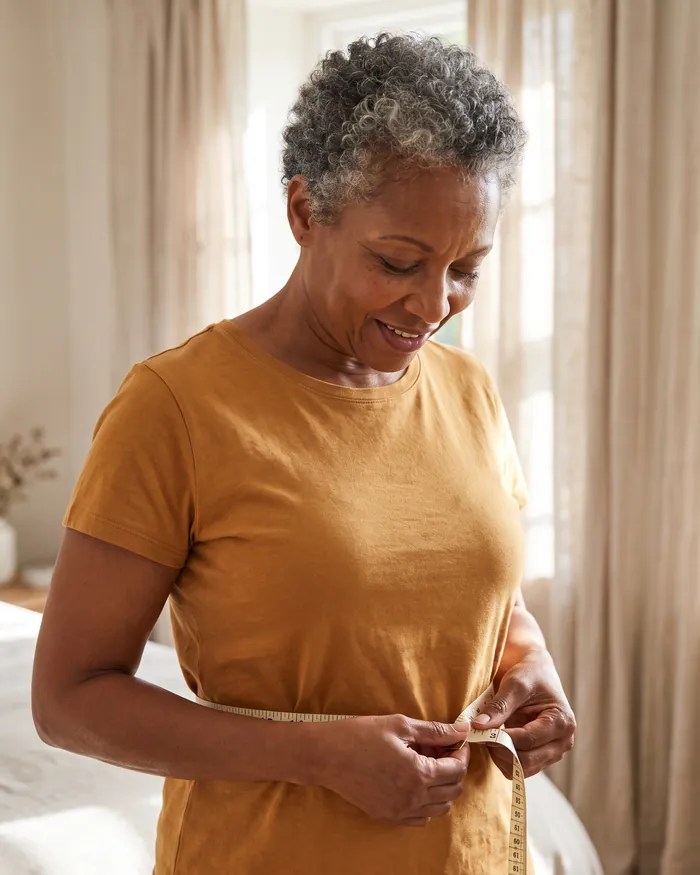
Measurement card
Measure over thin clothing. Decimals are fine.
Add your measurements. The dress form takes on your proportions as you type.
How the calculator decides
No black box. These are the rules, checked from top to bottom. The first one that fits names your shape. Percentages are rounded to one decimal before they are compared, so the rule uses the same numbers the card shows.
| Shape | Rule | Example, cm |
|---|---|---|
| Apple | Waist is at least 95% of your hips and at least 85% of your bust. | 112 / 108 / 110 |
| Hourglass | Bust and hips less than 5% apart, and waist at least 25% smaller than both. | 96 / 70 / 98 |
| Pear | Hips at least 5% larger than bust. | 90 / 74 / 104 |
| Inverted triangle | Bust at least 5% larger than hips. | 104 / 80 / 94 |
| Rectangle | Everything else: bust and hips less than 5% apart, with a waist less than 25% smaller than the smaller of the two. | 90 / 78 / 92 |
| Shape | Rule | Example, cm |
|---|---|---|
| Oval | Waist is at least 95% of your chest. | 112 / 110 / 106 |
| Triangle | Hips at least 5% larger than chest (only if you enter hips). | 98 / 90 / 106 |
| Inverted triangle | Waist 80% of chest or less. | 112 / 86 / 98 |
| Trapezoid | Waist more than 80% and up to 88% of chest. | 104 / 88 / 100 |
| Rectangle | Waist more than 88% and under 95% of chest. | 100 / 92 / 98 |
Examples read bust (or chest) / waist / hips. The women’s cut-offs use round numbers similar to those in many style guides: 5% for bust against hips, 25% for a defined waist. The men’s bands borrow from tailoring, where the gap between chest and waist is called the drop; a classic regular-fit suit assumes roughly 15 cm (6 in) between them, which lands in trapezoid here.
It is a starting point, not a box. Bodies sit on a continuum and the borders between shapes are drawn by people, not by nature. The figure on the card only shows proportion, never size: the largest measurement is always drawn the same width. Whatever it says, you decide what to emphasize.
One outfit, three bodies
The same three product photos, put on three different people with FitInView’s AI try-on. Shape guides talk in principles. Here you can see the same outfit on three sets of proportions, and how it does different work on each person.
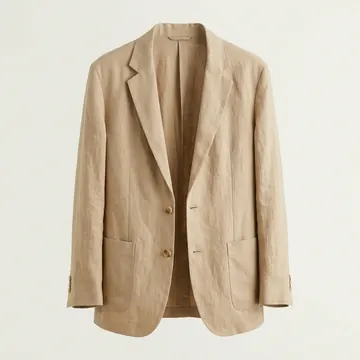 Unstructured linen blazer, oat
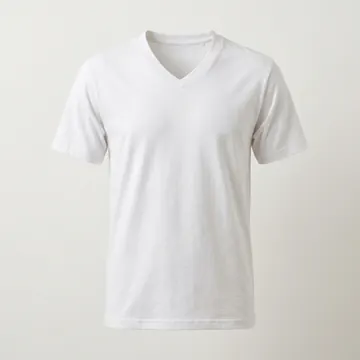 White cotton V-neck tee
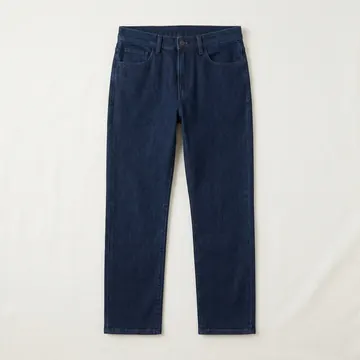 Dark straight-leg jeans
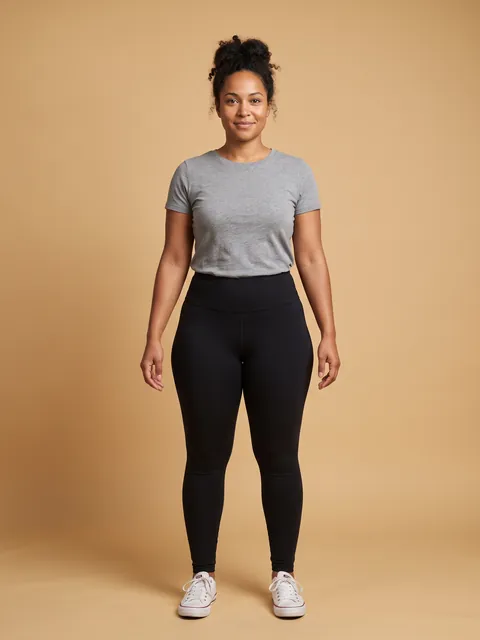
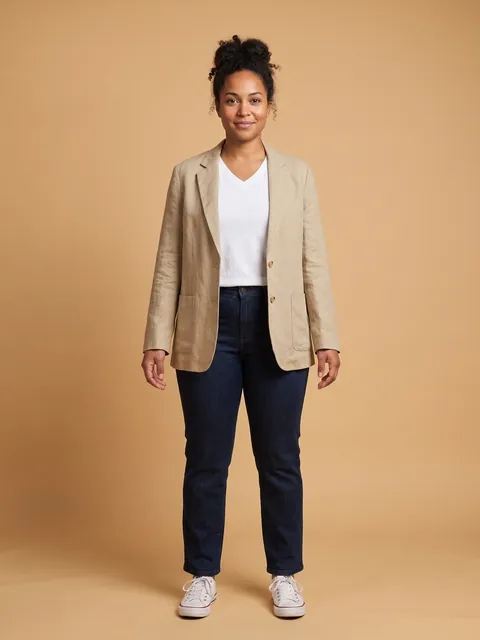 AI try-on exampleOriginal photo
Pear shape
hips wider than bust
- Open blazer. Its natural shoulder lines up with hers, and the hem stops just past the widest part of her hips. It adds a little structure on top without drawing a line across the hip.
- V-neck, tucked. The tee ends at the waistband, which keeps her waist visible between the open fronts of the jacket.
- Straight leg. The jeans drop straight from the hip instead of tapering in, so the lower half reads as one clean column.
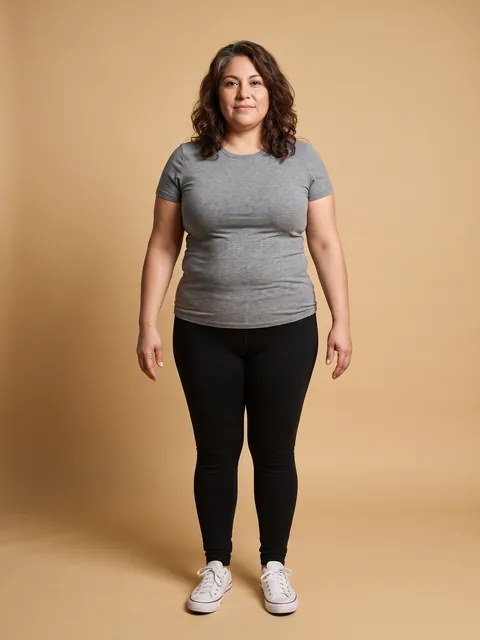
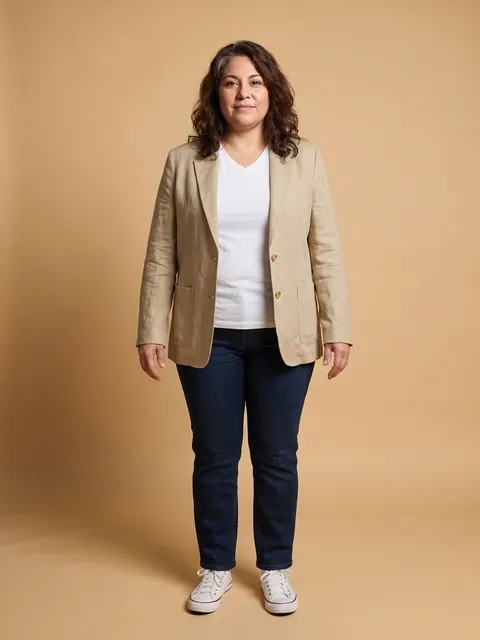 AI try-on exampleOriginal photo
Apple shape
plus-size
- Open blazer. Worn open, the two front edges make long vertical lines from shoulder to below the hip. Buttoned, the jacket would pull across the middle; open, it hangs straight.
- V-neck, untucked. The V repeats that vertical line at the neck. Untucked, the tee skims her middle rather than marking the waistband.
- Straight leg. Her legs are narrower than her middle. A straight, dark leg shows their shape without clinging the way the leggings do.
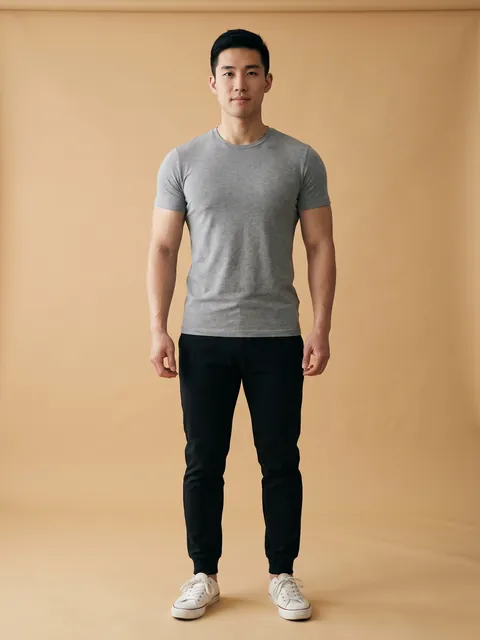
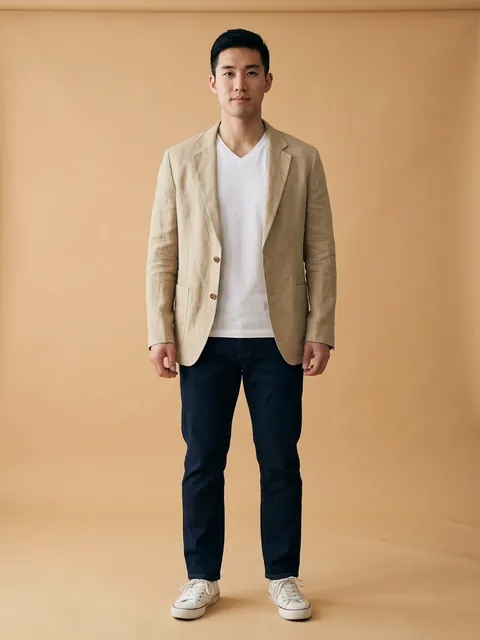 AI try-on exampleOriginal photo
Inverted triangle
athletic build, broad shoulders
- Open blazer. Unstructured, with no shoulder padding, so it follows his shoulders instead of adding width on top of already broad ones.
- V-neck, untucked. The V breaks up the wide expanse of chest that a crew neck shows edge to edge.
- Straight leg. Next to the slim joggers, the straight jeans give his legs more visual weight, which balances his broad upper body.
AI try-on examples, made from one photo of each person plus the three product photos. A try-on shows how cut, length and color sit on a body. It cannot tell you how a fabric feels or whether a size fits, so read the size chart too. Compare with the original photo: if anything looks smoother or narrower than the person, trust the original.
See the outfit on your own body
Upload a photo of yourself and a photo or shop link of a garment; FitInView shows you wearing it. Your photos are private to your account, and you can delete them.
The five shapes, and what to wear with each
Each guide covers tops, trousers, skirts, dresses and jackets, explains why each suggestion works, and ends with a men’s section for the matching shape.
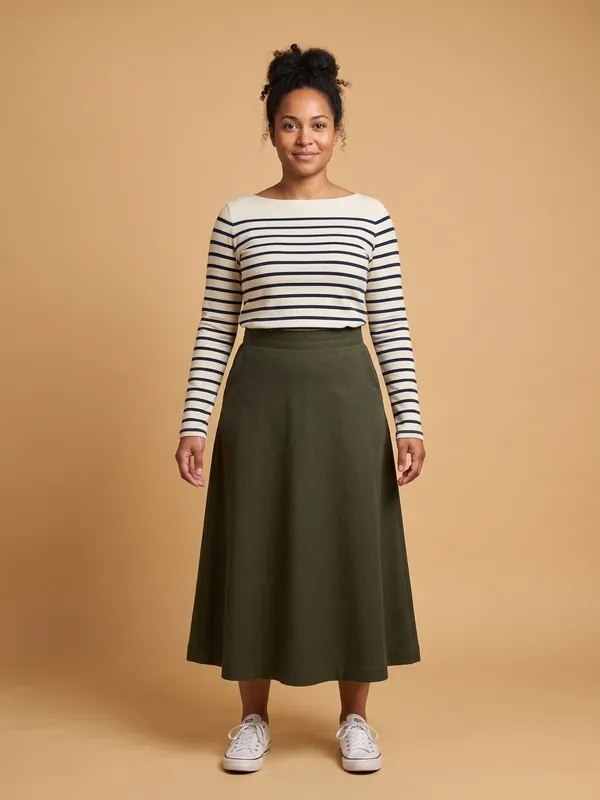 Pear (triangle)Hips wider than bust, usually a defined waist.Men’s equivalent: triangle
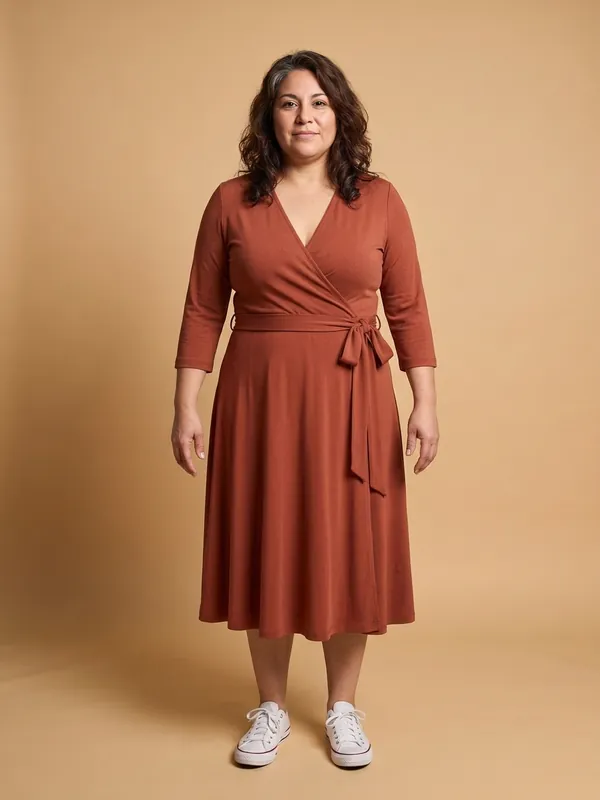 Apple (round)Fullest through the middle; waist close to hips and bust.Men’s equivalent: oval
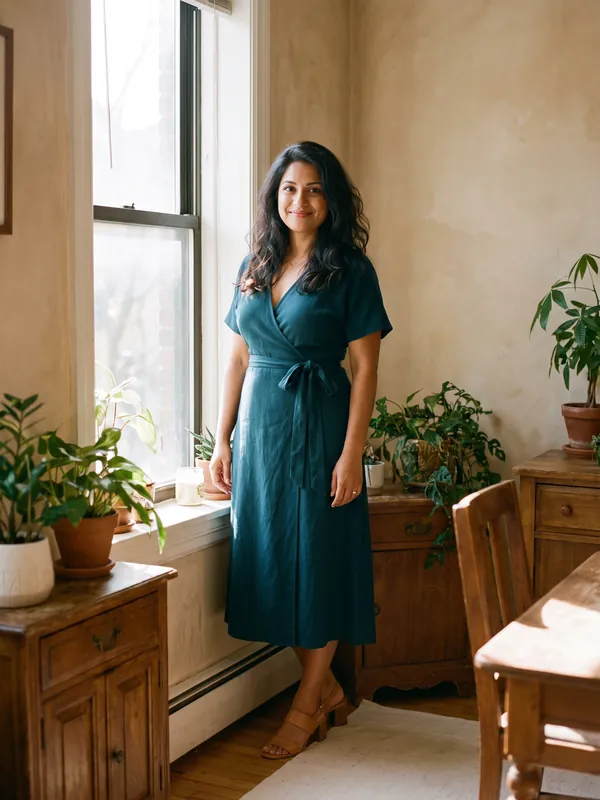 HourglassBust and hips about even, waist clearly narrower.Men’s equivalent: trapezoid
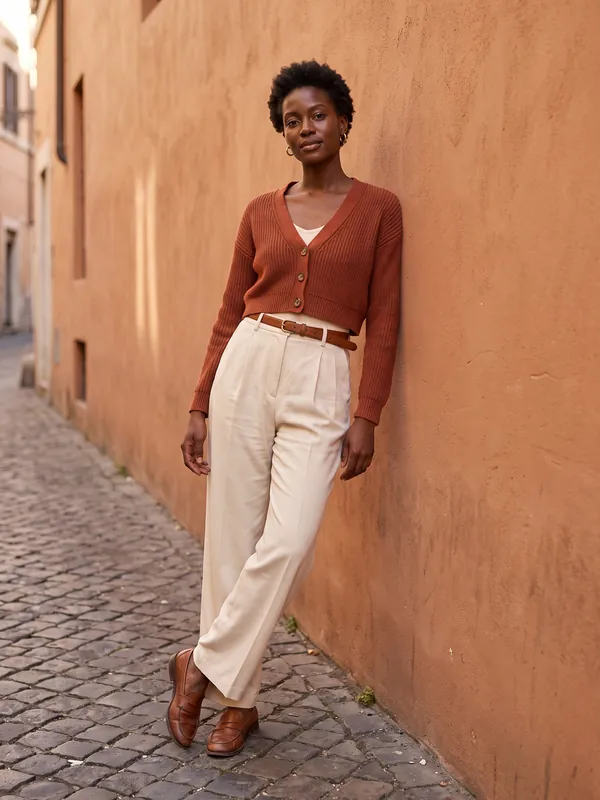 Rectangle (straight)Bust, waist and hips fairly even.Men’s equivalent: rectangle
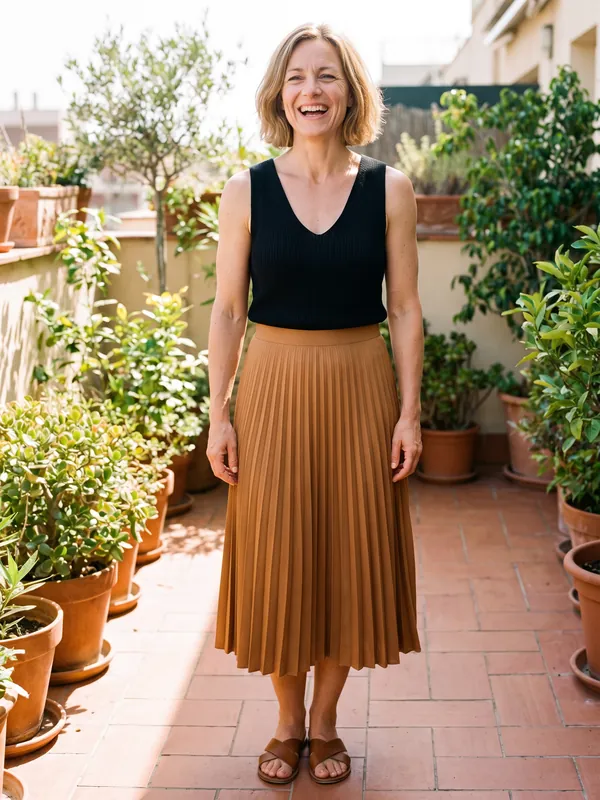 Inverted triangleBust or shoulders wider than hips.Men’s equivalent: inverted triangle
Questions people ask
How do I find out my body shape?
Measure your bust, waist and hips with a soft tape (the measuring guide shows where), then compare them. The calculator on this page does the comparison for you and shows the percentages it used, so you can check its work.
What if I am between two shapes?
That is common, because real bodies sit on a sliding scale and the cut-offs are round numbers. If a 2% change in one measurement would move you into another shape, the calculator says so. Read both guides and keep the ideas that work on you.
Does body shape depend on weight or dress size?
No. Shape is about proportion, not size: there are slim apples and plus-size hourglasses. Your proportions can shift over the years, with weight change, pregnancy, menopause or strength training, so it is worth measuring again now and then.
Is there a body shape calculator for men?
Yes. Switch the card to the Men’s tab. It uses chest, waist and (optionally) hips and shoulders, and sorts into trapezoid, rectangle, inverted triangle, triangle or oval, each with its own guidance. Shoulders are shown for reference only and do not change the result; without hips, it cannot return triangle.
Do I need the high hip measurement?
No, it is optional. It tells you where the fullness of your hips sits: high, around the top of the hip bones, or low, at the seat and thighs. That helps more with choosing trouser cuts than with naming a shape. If your high hip is the larger of the two, the calculator uses it as your hip.
Are these rules scientific?
No. They are conventions. Style guides use similar cut-offs, and the round numbers (5%, 25%) make them easy to check by hand, but they are not a medical or scientific classification. Treat the result as useful vocabulary for shopping, not as a verdict.