Pear body shape outfits
Hips wider than your bust, usually a defined waist. How to build outfits around that, with the reasoning behind each choice so you can keep what suits you.
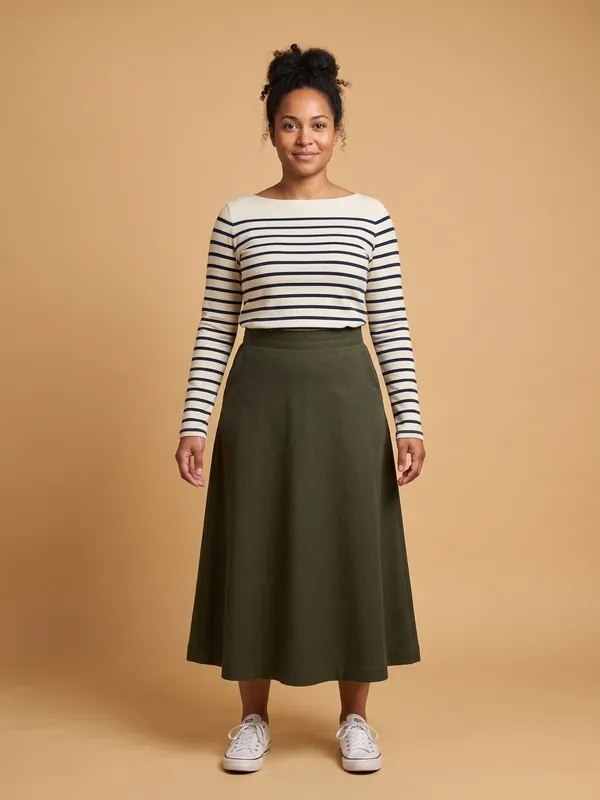
If your hips measure noticeably wider than your bust, you have what is usually called a pear shape. It goes by triangle and A-shape too. The waist is usually well defined, the shoulders often a little narrower than the hips, and the fullness sits at the hips, seat or thighs, or across all three.
None of that needs fixing. What follows is a set of options for whatever you want an outfit to do, with the reason behind each one, so you can pick and choose.
What makes a pear shape
On the measurement card, pear means your hips are at least 5% larger than your bust. A 90 cm bust with 95 cm hips is already there (5.6%); at 104 cm hips the difference is about 16%. The waist can be anything below 95% of the hips. If it reaches 95% of the hips, the calculator calls you an apple instead.
The optional high hip measurement tells you more. If your hip is much larger than your high hip, the curve sits low, at the seat and thighs. If the two are close, the width starts higher up, right under the waist. That difference matters more for trousers than for anything else, and it is covered below.
Decide what you want to emphasize
Pear advice usually assumes one goal, balancing the hips with the shoulders. There are at least three, and you can switch between them day to day:
- Balance. Bring visual weight up: detail, color and structure on top, simpler shapes below.
- Waist. Your waist is often the narrowest point by a good margin, so anything that marks it (a tuck, a belt, a wrap) shows the curve.
- Curve. Lean into the hips with a pencil skirt or a fitted knit dress. That is a style choice, not a mistake.
Tops and necklines
Necklines that run horizontally across the collarbone (boat necks, square necks, wide scoops, off-the-shoulder) make the shoulder line read wider. The striped top in the photo at the top of this page does that: the neckline runs nearly shoulder to shoulder and the stripes carry the eye outward.
- Sleeves with some shape at the top, such as a slight puff, a pleated sleeve head or a structured shoulder, add width where you may want it.
- Color, print and texture on top draw the eye up. A bright top over darker trousers is the simplest version.
- Watch where the hem lands. A top that ends right at the widest part of the hip draws a horizontal line there. If you would rather the eye kept moving, go shorter (tucked or cropped to the waist) or longer (past the widest point).
- Wrap tops and peplums mark the waist, and a peplum that flares from the waist adds a little volume that echoes the hips rather than competing with them.
Trousers and jeans
This is where pear shapes tend to struggle in shops, because standard sizing assumes a smaller gap between waist and hip. If trousers fit your hips and gape at the back of the waist, the cut is the issue, not you.
- Look for curvy fit jeans and trousers. Several brands now cut a version with more room through the hip and seat for the same waist size. Names vary by brand, so read the product description.
- A high rise sits at the narrowest point and stays put when you sit down. Stretch in the fabric helps the waistband hug rather than gape.
- Straight, wide-leg, bootcut and flared legs fall from the widest point of the hip or thigh in a straight or widening line, which balances the hip. Skinny jeans taper in from the thigh to the ankle and show the full hip-to-ankle contrast. Both are fine; they just do different things.
- A darker, even wash keeps the lower half calm if you want the attention on top.
- If your high hip and hip are close, look for trousers with a flat front and no extra fabric under the waistband. If the curve sits low, a slightly longer rise at the back stops the waistband pulling down when you sit.
Practical fit tip: buy trousers to fit your hips and thighs, then have the waist taken in. It is one of the simplest alterations a tailor does.
Skirts and dresses
- A-line skirts skim the hip and widen gently. The olive midi in the same photo starts at the natural waist and flares to mid-calf, so there is no tight point across the hip at all.
- Fit-and-flare and wrap dresses fit the top and waist and release over the hip. They are a classic pear choice because they combine all three goals: balance, waist and ease.
- Bias-cut slip skirts in fabrics with drape follow the curve softly without clinging.
- Pencil skirts and bodycon dresses do the opposite: they show the hip-to-waist curve fully. Choose them when that is the look you want.
- Midi and knee lengths both work. A hem that stops at the narrowest part of the leg (just below the knee, or the ankle) tends to look deliberate.
Jackets and coats
Jackets can do the most structural work for a pear shape, because they sit on the shoulders.
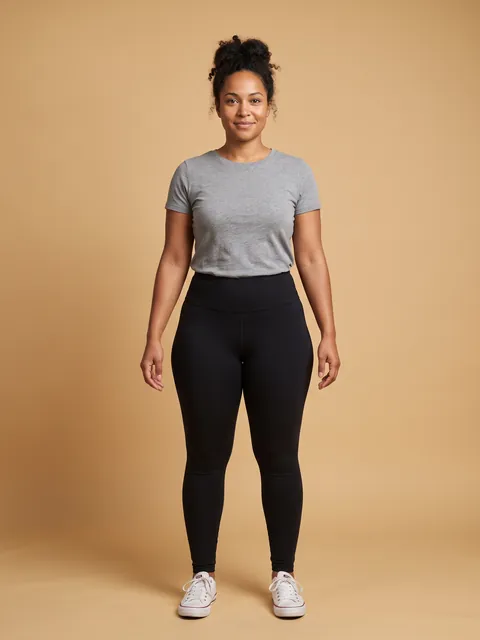
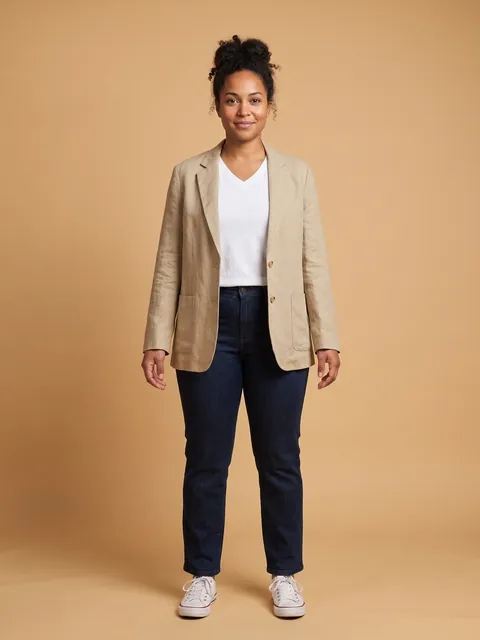
- A jacket with a defined shoulder adds width up top. In the one outfit, three bodies example, the open blazer lines up with her shoulder and stops just past her hips, so it adds structure without drawing a line across the widest point.
- Cropped jackets that end at the waist pair well with A-line skirts and high-waisted trousers.
- For coats, a belted wrap or a coat that flares slightly from the waist moves well over the hip. A straight, boxy coat often has to be sized up for the hips and then swamps the shoulders.
Shoes and accessories
Earrings, scarves and necklaces keep the eye near the face. Shoes with a low-cut front (the vamp) or a pointed toe extend the leg line. Neither is required; they are options.
For men: the triangle shape
On the men’s card, triangle means your hips measure at least 5% more than your chest. It is less talked about than the athletic V, but plenty of men have it, often with a solid build through the seat and thighs and shoulders that slope a little.
- Add structure on top. Jackets with a defined shoulder, overshirts with chest pockets, and shirts with a yoke across the back all widen the upper body slightly.
- Layer up top, keep the bottom simple. An open overshirt or a cardigan over a tee adds visual weight at the chest. Plain, darker trousers keep attention there.
- Choose a straight leg. Very skinny trousers show the full taper from hip to ankle. A straight or relaxed-tapered cut evens it out and often has more room through the thigh.
- Mind the jacket length. A jacket that ends right at the widest part of the seat draws a line there. Slightly shorter or slightly longer keeps one clean line.
- Shirt cut. Athletic-fit shirts narrow sharply at the waist and can pull at the hips when untucked. A regular or tailored fit usually hangs better.
If you are close to another shape
If your waist is very defined and your hips only just clear the 5% mark, you may recognize yourself in the hourglass guide too. If the difference between waist and hips is small, the rectangle guide has useful ideas for creating curves. Take what works from both.
Try a boat neck or an A-line skirt on your own photo
Upload a photo of yourself and a photo or shop link of a garment; FitInView shows you wearing it. Useful for checking where a hem lands on your hips before you buy.